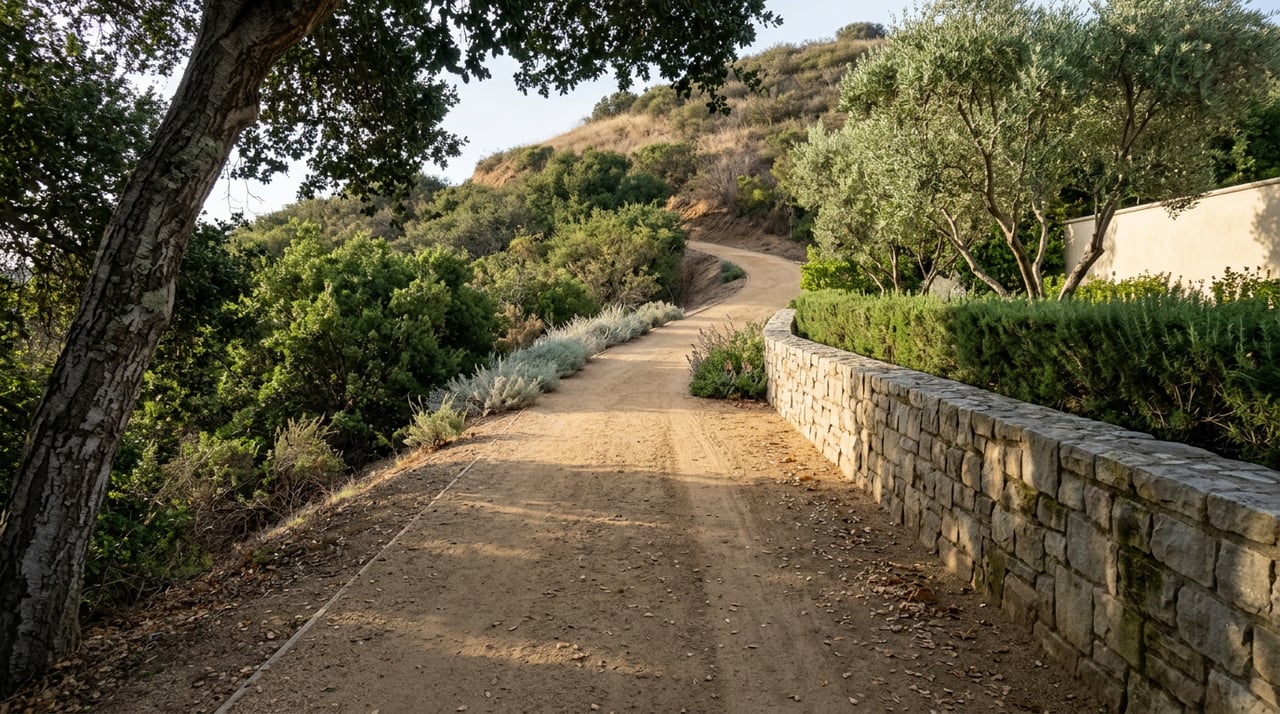
On a weekday morning along the Gage Canal path, a jogger slows to let a horse and rider pass on the narrow shoulder. Nobody posted a sign telling either of them how to handle it. There isn't one. That small negotiation, repeated daily across Alessandro Heights, points to something the neighborhood's real estate listings rarely mention: the arroyos that give this hillside its privacy and its views are not managed the way a city park is managed. No ranger patrols them. No single agency sets the rules for who gets the trail when. The people who live here have had to work that out themselves.
That's worth sitting with, because the standard description of Alessandro Heights leans hard on the word "protected." City planners preserved the Alessandro, Prenda, and Woodcrest arroyos when the hillside was built out in the 1980s, and that preservation is real. But protected land and managed land are two different things, and the gap between them shows up in how residents actually spend their mornings here.
Three Arroyos, No Single Rulebook
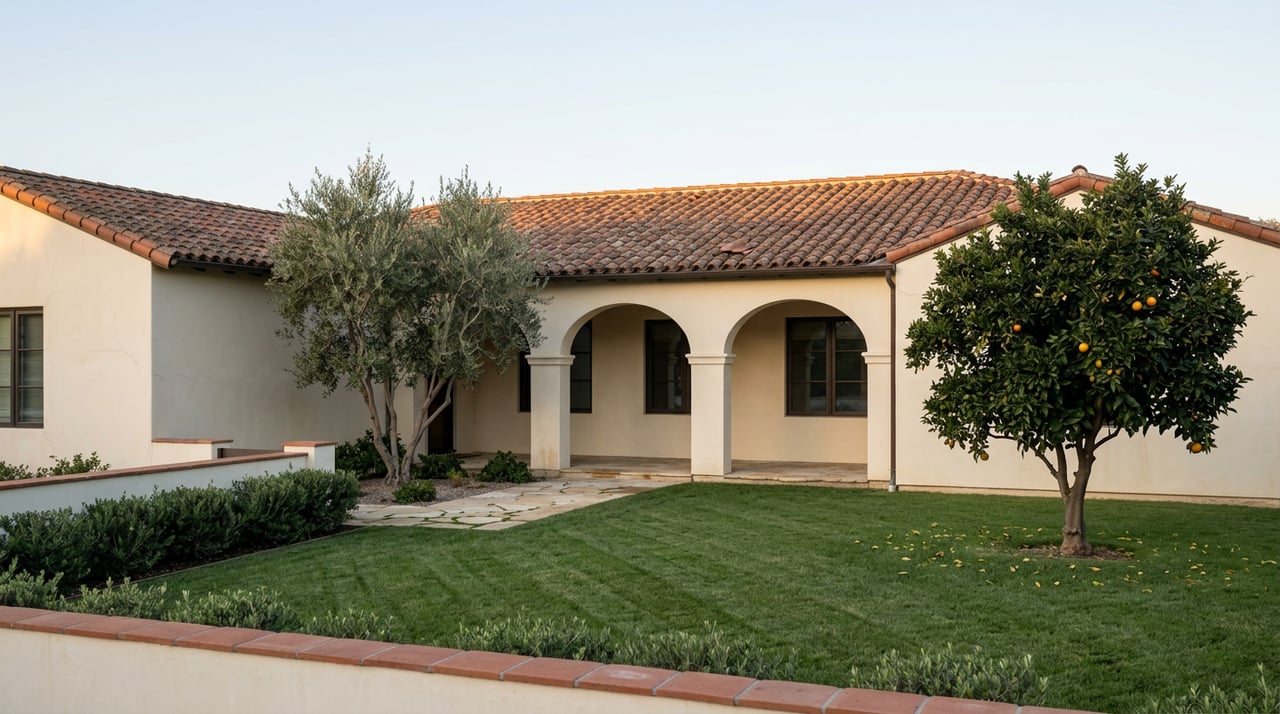
The City of Riverside's own account of the neighborhood is direct about this. Alessandro Heights sits in the southernmost part of the original city footprint, expanded by annexations in 2001 and 2007, and the terrain stayed mostly undeveloped until the estate homes went in during the 1980s. The city's neighborhood page notes that the three arroyos are "not just conduits for water, but rich and varied areas of animal and plant life," and that residential development was shaped specifically to protect them.
What that account doesn't spell out is who takes care of the trails that run alongside all that protected terrain. There's no municipal trail crew assigned to Alessandro Heights the way there is for a maintained public space like nearby Canyon Crest's Sycamore Canyon Wilderness Park. There's no single homeowners association covering the whole hillside either, since some of the larger, more rural-zoned parcels here were never brought under HOA governance at all. The arroyos function more like a shared easement than a park: everyone benefits from the open space, and nobody has exclusive responsibility for how it gets used.
Overlook Parkway, the neighborhood's main entrance and its designated "Scenic Boulevard," makes the same point in miniature. It's a beautifully landscaped, tree-lined road winding up into the hills, and it works because residents have collectively kept it that way. There's no city ordinance requiring the median to look the way it does. It looks that way because people who live here have decided it should.
The Trail-Sharing Etiquette Nobody Posted
The friction this creates is not abstract. Neighbors have used community message boards to ask, politely but pointedly, for more responsible use of the equestrian trails: stay on the established paths, stay out of people's backyards, leave the manicured banks alone. Separately, there have been requests for more law enforcement presence specifically to address illegal motorcycle riding cutting through the same trail network that hikers, dog walkers, and horses share.
None of this is a crisis. It's the ordinary cost of having genuinely unmanaged open space in a neighborhood built around privacy. A few things residents have settled on through practice rather than policy:
- Yield to horses. Riders on a nervous animal need more room and more warning than two hikers passing each other.
- Keep dogs leashed near the arroyo edges, both for coyote safety and because a loose dog near a horse is a real hazard for everyone involved.
- Motorized vehicles do not belong on the equestrian and pedestrian trails, full stop. This has been a recurring source of neighbor complaints, not a hypothetical.
- If a trail cuts close to a private yard, treat the property line as real even where there's no fence marking it.
None of these are laws. They're the accumulated etiquette of people who understood early on that nobody else was going to write the rules for them.
Wildlife Corridor Is Not a Marketing Phrase
The same undeveloped terrain that makes the arroyos worth protecting is also why coyotes are a normal part of life here, not an occasional surprise. The City of Riverside's Public Works Department takes this seriously enough to publish its own coyote encounter guidance for residents, a sign that hillside neighborhoods like this one are exactly where the city expects the encounters to happen. The coexistence habits long-time residents have settled into track the same practices wildlife agencies recommend everywhere coyotes and hillside living overlap: keep pet food and water indoors, don't let small dogs or cats roam unattended, and if a coyote seems to be shadowing you on a trail, stay confident and make yourself seen rather than turning your back.
This isn't a warning sign to post at the trailhead. It's just an honest accounting of what living next to preserved arroyos actually involves. The rugged, undeveloped plateaus at the east end of the neighborhood and the three arroyos that wrap around it are the reason the views are so good and the reason a coyote sighting in your backyard is unremarkable rather than alarming. Residents who've been here a while tend to treat it the way they'd treat any other weather pattern: worth knowing about, not worth losing sleep over.
Where the Path Actually Goes
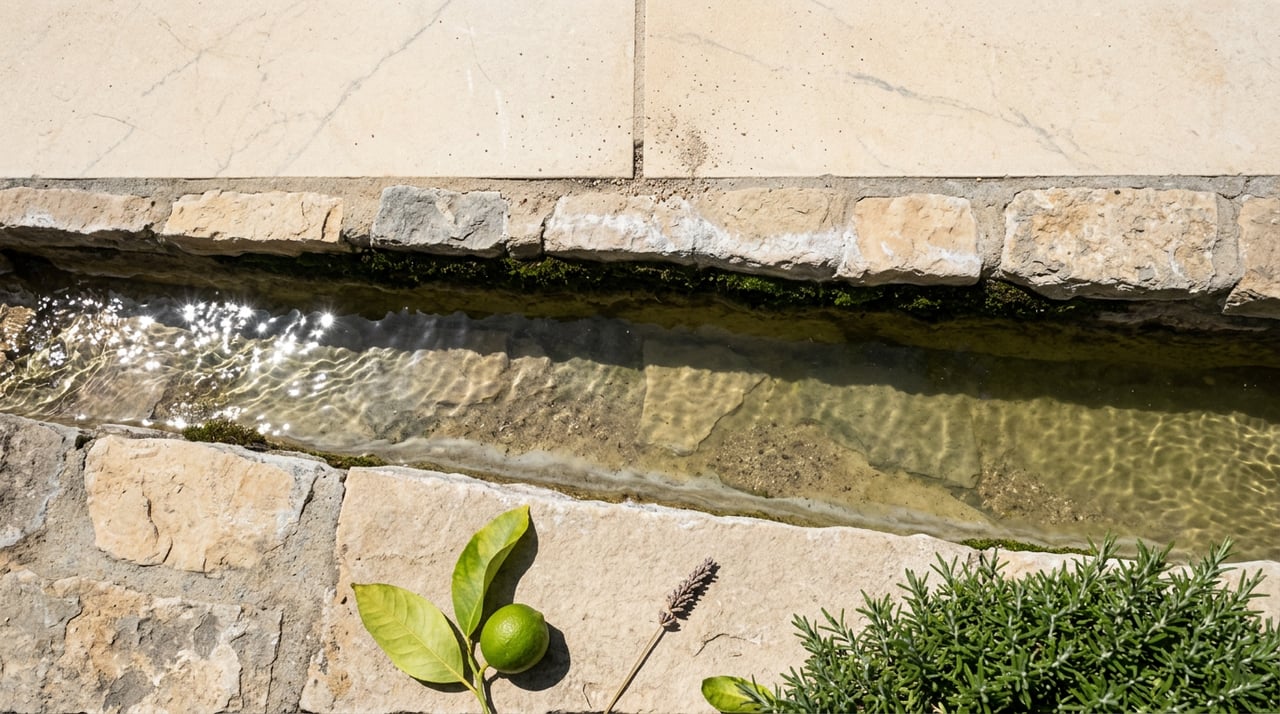
For anyone new to the routine, the practical version looks something like this. Enter from Washington Street and take Overlook Parkway up into the hills, past the landscaped median that gives the road its Scenic Boulevard designation. The Gage Canal trail, which runs alongside the historic canal, gives walkers and cyclists a flat, shaded stretch that connects to the surrounding hill trails without requiring a car. In August, with Inland Empire mornings already warm by eight, the trail is busiest before sunrise, when hikers, dog walkers, and the occasional rider are all trying to beat the heat rather than each other.
If the loop takes you south toward Van Buren Boulevard, Gless Ranch is worth the detour. John Gless started farming citrus in the nearby Woodcrest area on acreage most people considered unsuitable for the crop, and the family-run market that grew out of that bet still sells the oranges, grapefruit, tangerines, limes, lemons, dates, and avocados the ranch grows today. It's open daily from 8 a.m. to 6 p.m. and stocks local jams and produce from other growers alongside its own citrus. It's a fitting place to end a walk that started on protected land nobody formally manages: another piece of Riverside's agricultural character that survives because people kept showing up for it.
The Quiet Work of Keeping It This Way
The arroyos are the one part of Alessandro Heights that resists tidy categorization. They're not a city park, not a private amenity, not fully governed by any HOA. They're simply preserved, and preservation without active management means the neighborhood itself has to supply the etiquette, the patience, and occasionally the phone call about illegal riding on the trails. That's not a flaw in how the neighborhood was built. It's the tradeoff that comes with land nobody wanted to pave over, and most residents here seem to think it's worth it.
If you're already living along the arroyos and have found your own rhythm for sharing them, or you're curious what the market looks like for a home in this stretch of Riverside this season, the team at Brad Alewine Group knows this hillside well enough to talk through either conversation. Reach out any time.