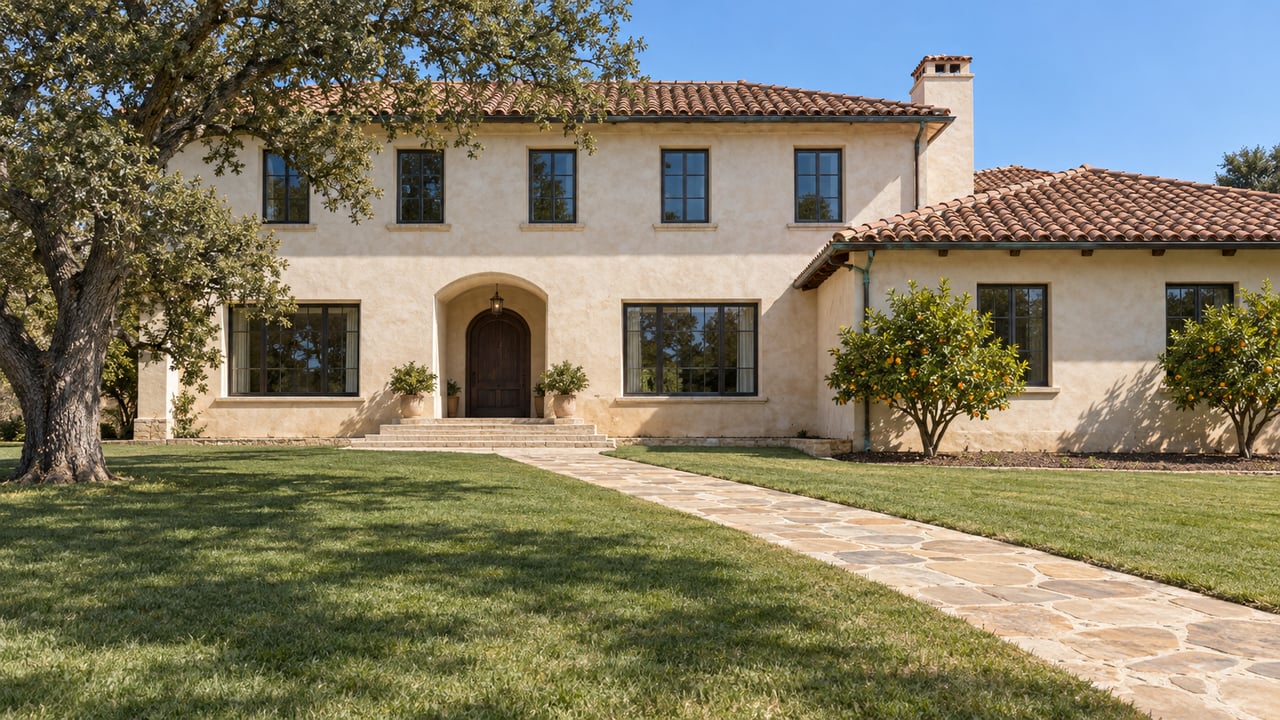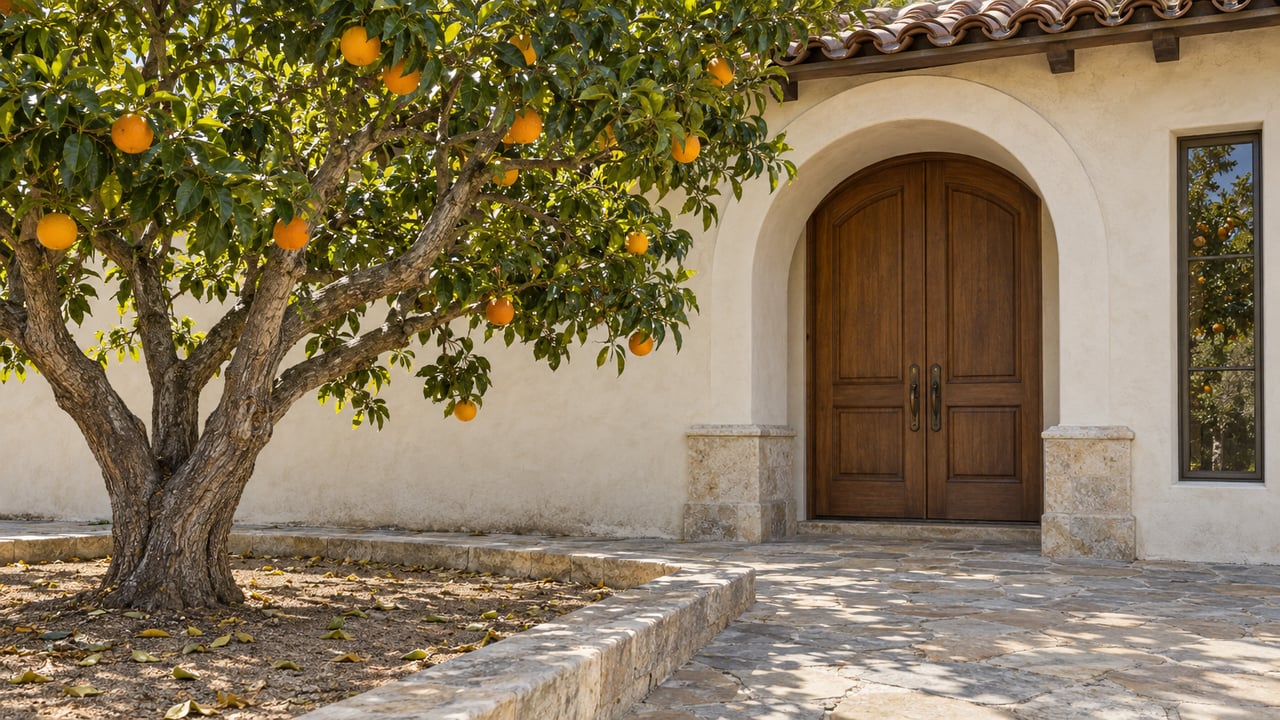
At the corner of Magnolia and Arlington avenues, the most famous orange tree in California grows inside a screened enclosure. The tree fills nearly all of it. When the Press-Enterprise went inside last December, it measured the space at 22 feet from ground to ceiling and 25 feet on each side, and the branches were heavy with fruit down to knee level.
This is the Parent Washington Navel, and navel season is starting. UC Riverside's citrus collection lists the variety's season of ripeness at Riverside as November to January. Every orange tree in and around the Greenbelt that people know by name already has someone responsible for it. The City waters one, UC Riverside guards it, a contractor harvests it, and a family farming company has managed the state park grove since 1993. If you live in Arlington Heights, you get a navel through those caretakers: a weekend tour, a roadside stand or the City's crates from the parent tree's harvest.
The original tree has a full team
The Press-Enterprise reported that the parent tree is on City property and that City parks employees water it and handle basic care. UC Riverside's citrus experts handle the technical work: pruning, testing for pathogens, monitoring temperatures and setting care protocol. The tree was planted at Arlington and Magnolia on April 23, 1902, in what the paper called a tiny fenced park. Its partner tree went to the Mission Inn, where President Theodore Roosevelt transplanted it in 1903. Root rot killed the Mission Inn tree in 1922. The Citrus Experiment Station, which is now part of UC Riverside, saved the City's tree by grafting new roots onto it, once in the 1920s and again in the 1950s.
The screen went up in 2019. The insect it keeps out is the psyllid, which carries citrus greening disease. Georgios Vidalakis, director of UC Riverside's citrus protection program, explained the reason for the enclosure to the Press-Enterprise:
"We're not hiding the tree. We're saving the tree. The alternative is that we are the generation that lost the tree."
The harvest has its own process. On December 5, 2025, two workers from RPW Services, which holds the City's harvest contract, picked the tree by hand. They were told not to use clippers, so they twisted or pulled each orange off and used a telescoping grabber for the high fruit. Their estimate of about 2,000 oranges matched a rough count by UC Riverside staff.
The fruit was meant for the public. The Press-Enterprise reported that the City's Parks, Recreation and Community Services Department planned to deliver crates to community centers, senior centers, the third floor of City Hall and the department's Marcy Library office. Last year was the third year of the distribution, and the crates were planned with faux vintage labels, a project led by parks administrative analyst Vanessa Mayne. Deputy director Anthony Zamora told the paper, "If anyone wants to enjoy an orange, they're welcome to do so."
The state park grove has a farmer
In the Greenbelt itself, the same arrangement works at a much larger scale. California Citrus State Historic Park, at 9400 Dufferin Avenue, has a commercial grove. In 1993, Gless Ranch won the bid to design, plant and farm it. According to the park's visitor guide, Gless Ranch picks and packs that fruit, and part of the proceeds goes back to the park. KVCR described the same setup in a 2025 visit to the park.
Visitors may walk through the grove but may not pick from it. The park's visitor guide states that picking and taking fruit is prohibited under Title 14 of the California Code of Regulations, and it links the park's posted orders. Dogs on leashes are allowed on the trails but not in the visitor center.
So in the park, you taste the fruit on a guided walk. State Parks runs free grove tours every Friday, Saturday and Sunday at 10 a.m. The tours last about 45 minutes, go through the variety groves, and are first-come with no registration. Tasting depends on what's in season and isn't guaranteed, and a tour can be canceled on short notice for rain, heat, wind or a staff shortage. The park's event calendar lists tours for Friday, November 6, and Saturday, November 7, the first weekend after this post goes up. The park line is (951) 940-5600, answered Monday through Friday from 8 a.m. to 4 p.m.
Here are the three places and who handles each one:
| Place | Who tends it | Who picks it | How a resident gets the fruit |
|---|---|---|---|
| Parent Washington Navel, Magnolia and Arlington | City parks staff, with UC Riverside citrus experts | RPW Services, under City contract | City crate distribution planned after the December harvest |
| California Citrus State Historic Park grove | Gless Ranch, farming the grove since 1993 | Gless Ranch | Tasting on a weekend tour when fruit is in season |
| Gless Ranch stands on Van Buren Boulevard | Gless Ranch | Gless Ranch | Buy it |
Across Dufferin, the oranges you can buy
The Gless Ranch "little fruit stand" opened in 2004 at Dufferin Avenue and Van Buren Boulevard, across the street from the park. Gless Ranch describes it as a place to buy local oranges and produce, for park visitors and for the neighborhood. It's open seven days a week, 9 a.m. to 5 p.m.
The larger Gless Ranch Farmer's Market is at 19985 Van Buren Boulevard. The park's visitor guide puts it about six miles up the road. It's open daily from 8 a.m. to 6 p.m. The market stands on the company's original "Number 3" grove site. It reopened in 2017 after the old fruit stand building was replaced on its original footprint, and it now sells local produce, artisan foods, gifts, craft beer, wine and specialty goods. The Gless Ranch online storefront lists navel oranges, grapefruit, avocados, lemons and dates, along with fresh-squeezed orange juice.
Riverside has also honored the family behind the stands. The Greater Riverside Chambers of Commerce named John and Janet Gless its 2024 Citizens of the Year, the Raincross Gazette reported, recognizing them as longtime citrus farmers and advocates for agriculture. Their company history says they began farming together in 1958, and all four of their children are now involved in the business.
A Saturday morning in navel season
Because the tour, the museum and the stand keep their own hours, the order of stops matters. This route uses the posted schedules:
- Park by 10 a.m. From October through March, California Citrus State Historic Park is open daily from 8 a.m. to 5 p.m. Vehicle entry costs $7, or $6 for seniors 62 and older, paid at the self-pay stations.
- Join the grove tour at 10. It's free, about 45 minutes, and needs no reservation. Wear comfortable shoes and bring water.
- Visit the visitor center and museum. Both are open Friday through Sunday from 10 a.m. to 4 p.m. The gift shop is open Saturday and Sunday on the same hours.
- Cross to the stand at Dufferin and Van Buren. It's open until 5 p.m. and sells local oranges from Gless Ranch, the company that farms the grove you just walked.
The park's visitor guide also bans drones and alcohol on park property and sets a 15 mph limit for cars and bicycles.
What the $30 million plan adds to the grove
The park is set for its largest change in years. A State Park and Recreation Commission staff report dated December 17, 2025, says the park has been allocated $30 million in state funding, secured through Assemblymember Sabrina Cervantes and Senator Richard Roth in partnership with the City of Riverside and Mayor Patricia Lock Dawson.
The plan includes a large open-turf concourse for public events, a grower's residence for educational programs and conferences, a workers' camp bunkhouse, and a wooden trestle bridge over an arroyo to connect the park's attractions. The visitor center exhibits would expand to cover the contributions of Chinese, Italian, Japanese, Korean, Mexican and Indigenous workers. They would trace the industry from Eliza Tibbets' introduction of the navel orange in 1873 to current threats such as citrus greening disease. As of that December report, the design consultant contract had been signed, a project kickoff was scheduled for January 2026, and the project archaeologist was finishing a cultural resources survey. The exhibit plan connects the park back to the screened tree at Magnolia and Arlington.
The rest of the season
The park's community calendar runs through more than one organization. The Friends of California Citrus Park list a Master Gardener Workshop on December 10 among their upcoming events. The Friends also run the park's spring Citrus Festival. The fourth annual festival was set for March 28, 2026, with citrus tastings, cooking demonstrations, music, vendors and activities for children, the Raincross Gazette reported.
UC Riverside's Givaudan Citrus Variety Collection, which preserves budwood descended from the parent tree, is a research collection. It isn't open to the general public, and the Raincross Gazette reports that tours are by request and rarely granted outside academic and industry circles.
After the December 5, 2025 harvest, the City planned to send the parent tree's oranges in crates to community centers, senior centers, City Hall and the Marcy Library office.
Brad Alewine has watched Riverside's citrus heritage up close since 1991. If you own a Greenbelt property with its own grove or a mature navel in the backyard and want to talk about how that history shapes the property, Brad Alewine Group is glad to walk it with you. Contact Us.