By the Brad Alewine Group
If you work from home in Riverside, California, you already know how much the right environment affects your productivity and efficiency. The Inland Empire's blend of spacious properties, year-round sunshine, and a growing base of remote professionals makes Riverside one of the best places in Southern California to carve out a truly functional, well-designed home office.
Whether you have a dedicated room, a converted bedroom corner, or a bonus space above the garage, how you design that workspace matters more than most homeowners realize.
Remote and hybrid work has fundamentally shifted what buyers prioritize when searching for Riverside homes. A dedicated home office is no longer merely a luxury feature; it's a practical necessity that directly affects how you work, how you feel at the end of the day, and what your home is worth to future buyers. The good news is that Riverside's housing stock, with its generous square footage and classic California layouts, gives homeowners real options when it comes to creating an office that works as hard as they do.
These home office design tips are built for the realities of Riverside living: warm, sun-drenched rooms, indoor-outdoor flow, and the kind of spacious floor plans you simply don't find in coastal cities at this price point. Whether you're designing from scratch or upgrading an existing setup, there's a lot of opportunity here to build something that truly improves your workday.
Key Takeaways
-
Choosing the right room or space within your home is the most important first decision in any home office design.
-
Lighting, both natural and artificial, has a measurable impact on productivity and on-screen visibility in California's bright climate.
-
Acoustic treatment and noise management are especially important in open-concept Riverside homes.
-
Ergonomics and storage should be planned together, not treated as afterthoughts.
-
A well-designed home office can meaningfully increase your home's appeal and market value.
Choosing the Right Space in Your Riverside Home
Before you think about furniture or paint colors, the most consequential home office design decision is which space you actually use. In Riverside homes, you often have more options than you'd expect: spare bedrooms, converted dining rooms, detached casitas, garage bonus rooms, and even wide hallways with alcove potential. Each comes with tradeoffs worth thinking through before you commit.
A dedicated room with a door is the gold standard, and for good reason. The ability to physically separate your work life from your home life at the end of the day is something remote workers consistently cite as a major quality-of-life improvement. If you have a spare bedroom that isn't being used for guests on a regular basis, repurposing it as a full-time home office is one of the highest-return moves you can make, both for your productivity and for the home's resale value.
That said, not every floor plan has an obvious candidate. If you're working with an open-concept layout, consider using a large bookshelf or partial dividing wall to create a defined zone without sacrificing the flow of the space. Detached structures, common in Riverside properties with larger lots, offer the most acoustically separate and visually contained setup of all, which makes them particularly valuable for video calls, deep focus work, or working unconventional hours.
A dedicated room with a door is the gold standard, and for good reason. The ability to physically separate your work life from your home life at the end of the day is something remote workers consistently cite as a major quality-of-life improvement. If you have a spare bedroom that isn't being used for guests on a regular basis, repurposing it as a full-time home office is one of the highest-return moves you can make, both for your productivity and for the home's resale value.
That said, not every floor plan has an obvious candidate. If you're working with an open-concept layout, consider using a large bookshelf or partial dividing wall to create a defined zone without sacrificing the flow of the space. Detached structures, common in Riverside properties with larger lots, offer the most acoustically separate and visually contained setup of all, which makes them particularly valuable for video calls, deep focus work, or working unconventional hours.
What To Consider When Selecting Your Home Office Space
-
Proximity to natural light sources, since rooms on the east or north side of the house tend to offer softer, more consistent daylight throughout the day.
-
Whether the room has a door or can have one installed for managing noise and visual boundaries.
-
Access to existing electrical outlets and ethernet ports, which affects how easily you can set up a clean, cord-managed desk arrangement.
-
The room's existing HVAC coverage, since Riverside’s summers can make a poorly ventilated room uncomfortable by mid-afternoon.
-
Long-term flexibility, meaning whether the space could be converted back to a bedroom or living area if your work situation changes.
Lighting Design for a California Home Office
Lighting is one of the most underestimated variables in any home office design, and it's especially relevant in Riverside, where the sun is strong and the angle of light changes significantly between seasons. The goal is to design for two different conditions: the bright, high-contrast mornings and the dimmer late afternoons, without creating glare on your monitor either way.
Natural light is a major asset, but it needs to be managed. Direct sunlight on your screen is one of the fastest ways to create eye strain and make video calls look washed out. Positioning your desk perpendicular to the window, rather than facing it or putting it directly behind you, gives you the benefit of daylight without the drawbacks. Adjustable sheer window treatments are a practical solution that lets you control brightness throughout the day while maintaining the open, airy feel that Riverside homes do so well.
For artificial lighting, a layered approach works best. Overhead lighting handles general illumination, a task lamp positioned on the opposite side from your dominant hand reduces shadow on your work surface, and a bias light behind your monitor reduces the contrast between the screen and the surrounding wall, which measurably reduces fatigue during long sessions. Warm-toned LED bulbs in the 2700K to 3000K range tend to make spaces feel more inviting without introducing the blue-light issues that can affect focus and sleep quality.
Natural light is a major asset, but it needs to be managed. Direct sunlight on your screen is one of the fastest ways to create eye strain and make video calls look washed out. Positioning your desk perpendicular to the window, rather than facing it or putting it directly behind you, gives you the benefit of daylight without the drawbacks. Adjustable sheer window treatments are a practical solution that lets you control brightness throughout the day while maintaining the open, airy feel that Riverside homes do so well.
For artificial lighting, a layered approach works best. Overhead lighting handles general illumination, a task lamp positioned on the opposite side from your dominant hand reduces shadow on your work surface, and a bias light behind your monitor reduces the contrast between the screen and the surrounding wall, which measurably reduces fatigue during long sessions. Warm-toned LED bulbs in the 2700K to 3000K range tend to make spaces feel more inviting without introducing the blue-light issues that can affect focus and sleep quality.
Lighting Elements Worth Investing In
-
Adjustable sheer or light-filtering window treatments that give you control over direct sun exposure.
-
A quality task lamp with adjustable color temperature, which lets you shift from cooler daylight tones in the morning to warmer tones in the evening.
-
Dimmable overhead fixtures so that you can fine-tune the ambient light level based on the task and time of day.
-
A monitor bias light, which is a simple LED strip placed behind your screen that notably reduces eye strain during extended work sessions.
Acoustic Management in Open-Concept Floorplans
Noise is one of the most common complaints among remote workers, and it's a particular challenge in the open, airy layouts that define a lot of Riverside’s homes. Hard floors, high ceilings, and large windows all reflect sound rather than absorbing it, which creates echo and makes it easier for background noise to impact calls. The good news is that acoustic treatment doesn't have to look utilitarian or out of place in a well-designed room.
Soft furnishings are your first and best option. A large area rug, upholstered chairs, and fabric window treatments all absorb sound reflections that would otherwise bounce around the room. For more targeted acoustic treatment, wall-mounted panels made from acoustic foam or fabric-wrapped fiberglass can be positioned strategically without dominating the visual character of the space. Many are available in colors and finishes that converge with the room's palette.
For those who do frequent video calls or recordings, a few targeted investments make a real difference. Acoustic panels on the wall behind your monitor (the wall that appears on camera) dramatically improve the sound quality of your calls for listeners on the other end. A USB microphone with a cardioid pickup pattern, which captures sound from in front while rejecting ambient noise from the sides and behind, is another upgrade that pays off quickly for anyone in client-facing roles.
Soft furnishings are your first and best option. A large area rug, upholstered chairs, and fabric window treatments all absorb sound reflections that would otherwise bounce around the room. For more targeted acoustic treatment, wall-mounted panels made from acoustic foam or fabric-wrapped fiberglass can be positioned strategically without dominating the visual character of the space. Many are available in colors and finishes that converge with the room's palette.
For those who do frequent video calls or recordings, a few targeted investments make a real difference. Acoustic panels on the wall behind your monitor (the wall that appears on camera) dramatically improve the sound quality of your calls for listeners on the other end. A USB microphone with a cardioid pickup pattern, which captures sound from in front while rejecting ambient noise from the sides and behind, is another upgrade that pays off quickly for anyone in client-facing roles.
Acoustic Improvements Worth Prioritizing
-
A large area rug under the desk area, which is often the single most impactful acoustic addition to a hard-floor room.
-
Fabric-wrapped acoustic panels on one or two walls, especially the wall visible on video calls.
-
A directional cardioid microphone if you spend significant time on calls or virtual meetings.
-
Solid-core door installation if your current home office door is hollow.
Ergonomics, Storage, and the Long-Term Setup
A home office design that looks great but causes physical discomfort after a few hours isn't actually doing its job. Ergonomics is the infrastructure layer beneath the aesthetics. Your monitor should be at eye level, your chair should support your lower back, and your keyboard and mouse should allow your elbows to rest at roughly 90 degrees.
Storage planning is equally important and often gets deferred until the clutter has already accumulated. Built-in shelving along one wall, a credenza behind the desk, or a combination of open and closed storage keeps the room functional without making it feel like a stockroom. The visual calm that comes from proper storage design is underrated; it reduces the cognitive load of working in a space that competes for your attention.
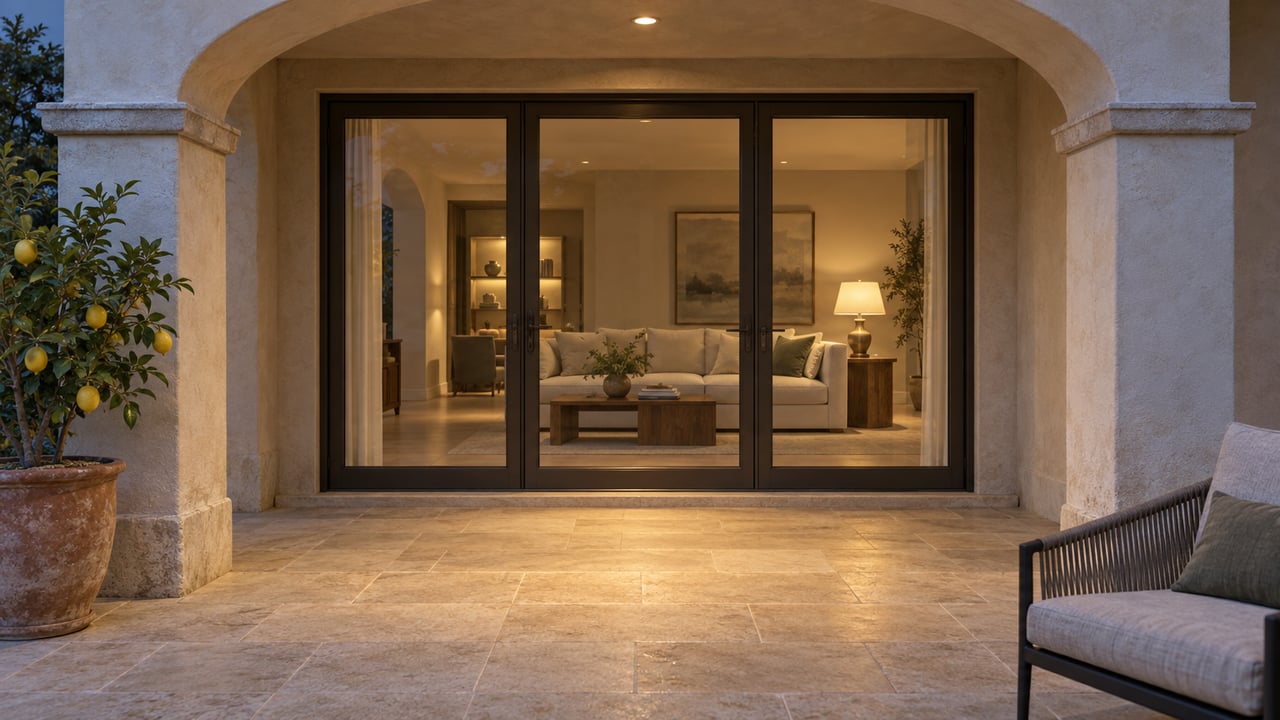
One aspect of Riverside living that's worth incorporating: the climate supports an indoor-outdoor connection. If your home office has access to a patio, courtyard, or even just a window that opens to a shaded outdoor area, designing with that in mind, via a small side table for outdoor work sessions or sliding doors that let in air without glare, can add quality to your workday during the temperate months.
Storage planning is equally important and often gets deferred until the clutter has already accumulated. Built-in shelving along one wall, a credenza behind the desk, or a combination of open and closed storage keeps the room functional without making it feel like a stockroom. The visual calm that comes from proper storage design is underrated; it reduces the cognitive load of working in a space that competes for your attention.
One aspect of Riverside living that's worth incorporating: the climate supports an indoor-outdoor connection. If your home office has access to a patio, courtyard, or even just a window that opens to a shaded outdoor area, designing with that in mind, via a small side table for outdoor work sessions or sliding doors that let in air without glare, can add quality to your workday during the temperate months.
Ergonomic and Storage Essentials
-
A monitor arm, which adds height and depth adjustability while freeing up desk surface for other work.
-
A lumbar-supportive chair appropriate to the number of hours you actually spend seated each day.
-
Cable management solutions built into the desk or routed along the wall.
-
Closed storage for supplies and paperwork, keeping the space looking clean for calls and focused work.
FAQs
What Makes a Home Office a Selling Feature in Riverside, CA?
Buyers searching for Riverside homes today consistently rank a dedicated, well-designed home office as a top priority. A room with a door, proper lighting, and built-in storage signals that the home was thoughtfully updated for modern work patterns. Even a well-staged office nook in an open-plan space can communicate value to remote-work buyers.
How Do I Deal With Glare and Bright Light in a Riverside Home Office?
The key is controlling direct sunlight rather than blocking it entirely. Positioning your desk perpendicular to windows, adding sheer or light-filtering window treatments, and choosing a matte monitor finish all help manage glare without sacrificing the natural brightness that makes Riverside’s homes so appealing.
Can I Convert a Garage or Casita Into a Home Office in Riverside?
Yes, and it's one of the most popular home office upgrades in the Riverside real estate market. Detached structures offer superior acoustic separation from the main house and give remote workers a physical boundary between work and home. Check with your local permitting office regarding any electrical, HVAC, or square footage requirements for the conversion.
Your Riverside Home Deserves a Workspace That Works for You
Designing a home office in Riverside, CA, is one of the highest-return upgrades you can make right now, whether you're optimizing for your own productivity, planning to sell, or simply trying to enjoy your home more fully during the hours you spend in it. The space you work in shapes the quality of your work, and Riverside's generous floor plans and year-round livability give you real tools to build something worth using every day.
If you're thinking about buying a Riverside home with a dedicated office space, or upgrading your current property before listing, our team at the Brad Alewine Group is here to guide you through every step. We know the local market, the neighborhoods where larger lots and flexible floor plans are most common, and what buyers are prioritizing right now. Reach out to us today.
If you're thinking about buying a Riverside home with a dedicated office space, or upgrading your current property before listing, our team at the Brad Alewine Group is here to guide you through every step. We know the local market, the neighborhoods where larger lots and flexible floor plans are most common, and what buyers are prioritizing right now. Reach out to us today.