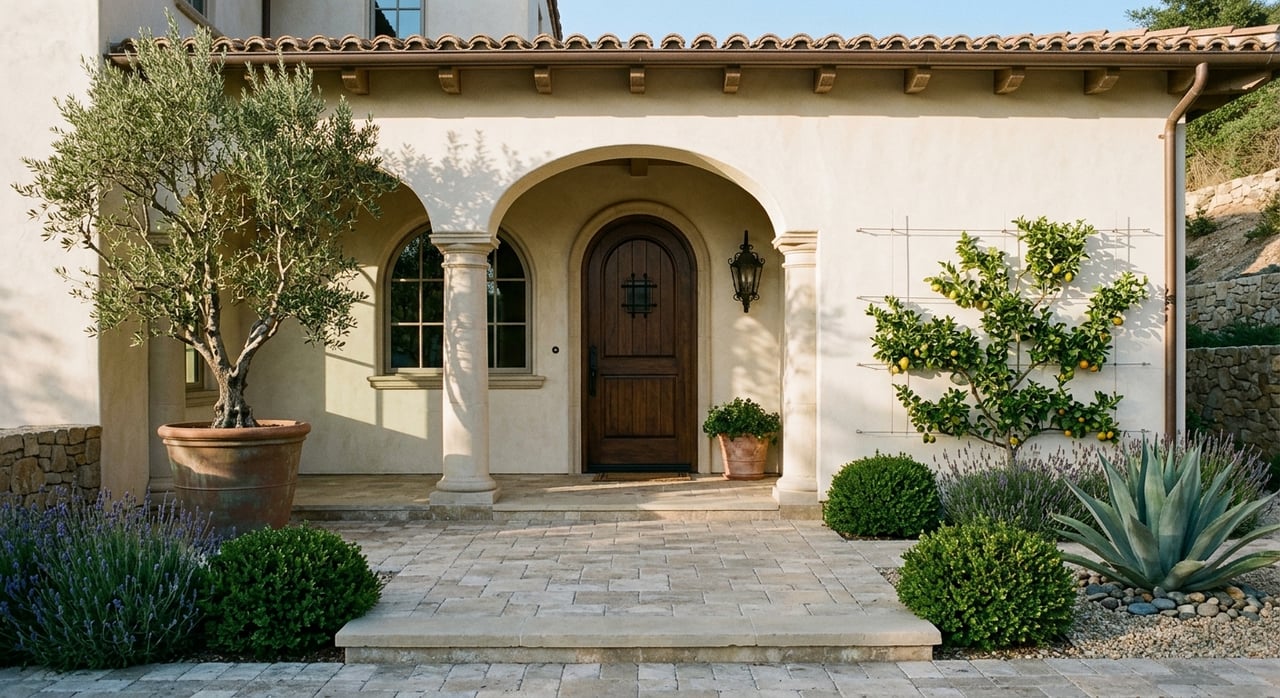
If you have ever driven through Riverside and felt like the city changes character from one block to the next, you are not imagining it. Riverside tells its story through architecture, with each neighborhood reflecting a different era of growth, design, and land planning. If you are buying or selling here, understanding those visual clues can help you read a home, a street, and even a neighborhood more clearly. Let’s dive in.
Why architecture matters in Riverside
Riverside is not defined by one signature home style. Instead, the city is shaped by layers of development, from early citrus-era neighborhoods to prewar revival districts, postwar Ranch tracts, and later hillside estate communities.
That layered history is still visible today. Riverside reports more than 3,000 Structures of Merit, 153 City Landmarks, 13 Historic Districts, 4 California Landmarks, and 2 National Historic Landmarks, which shows how strongly architecture continues to shape neighborhood identity.
For you as a buyer, that means style is about more than curb appeal. It can also hint at a home’s age, layout, lot pattern, and the kind of updates or preservation considerations that may come with ownership.
For you as a seller, architectural character can affect how your home should be prepared, marketed, and positioned. In a city like Riverside, details often matter.
Craftsman homes in Riverside
Craftsman homes are some of the easiest Riverside houses to recognize once you know what to look for. The city describes them as homes with low-pitched gable roofs, wide eave overhangs, exposed rafters, grouped windows, open porches, and simple square columns.
The smaller versions, often one to one-and-a-half stories, are commonly known as Craftsman bungalows. These homes tend to feel grounded and approachable, with front porches that connect the house closely to the street.
In Riverside, good local reference areas for Craftsman and California Bungalow homes include the Wood Streets, Redwood Place West, Seventh Street East, and parts of Downtown. These neighborhoods help show how early 20th-century homebuilding blended design with walkable street layouts and smaller lots.
What to notice on a Craftsman home
When you stand in front of a Craftsman house, focus on the roofline first. You will usually notice a low, broad shape rather than a tall or steep silhouette.
Then look at the porch and trim details. Exposed rafters, tapered or square porch columns, and grouped windows are often the biggest visual clues.
Mission Revival and Spanish Colonial Revival
Few places can claim as much ownership of Mission Revival as Riverside. The city states that Mission Revival was born in Riverside, and it remains one of the most important architectural influences in the local landscape.
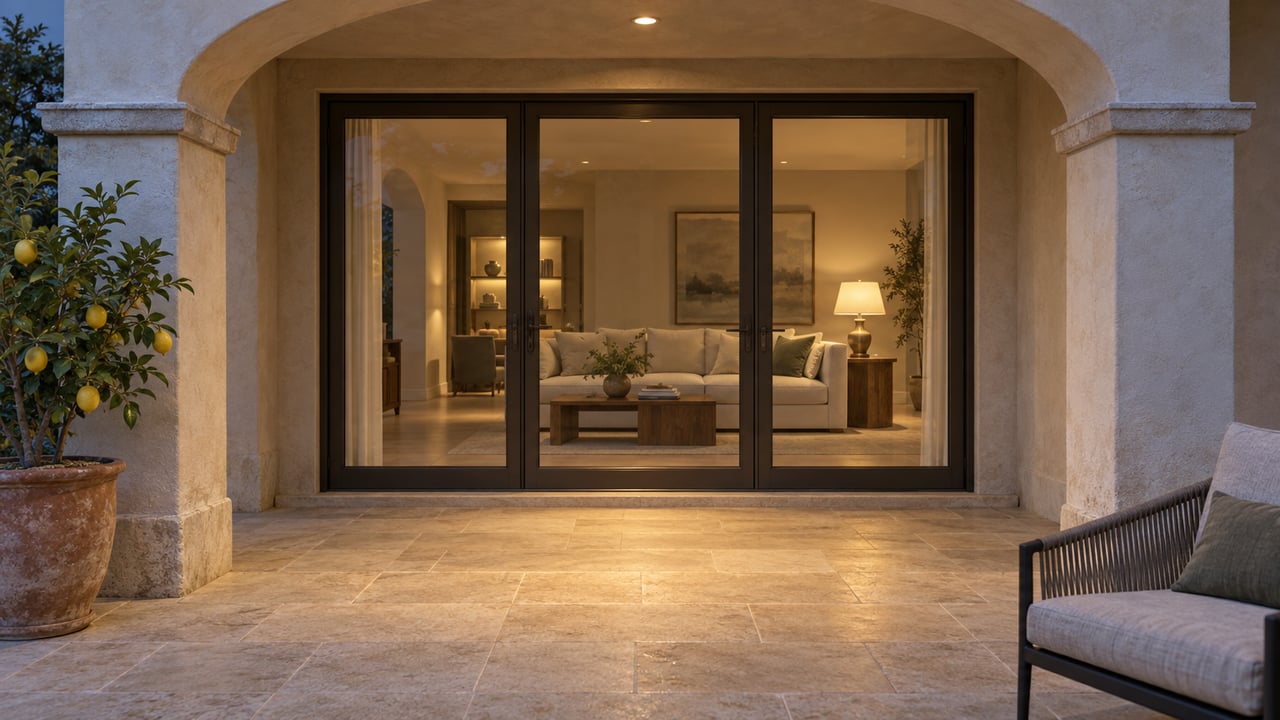
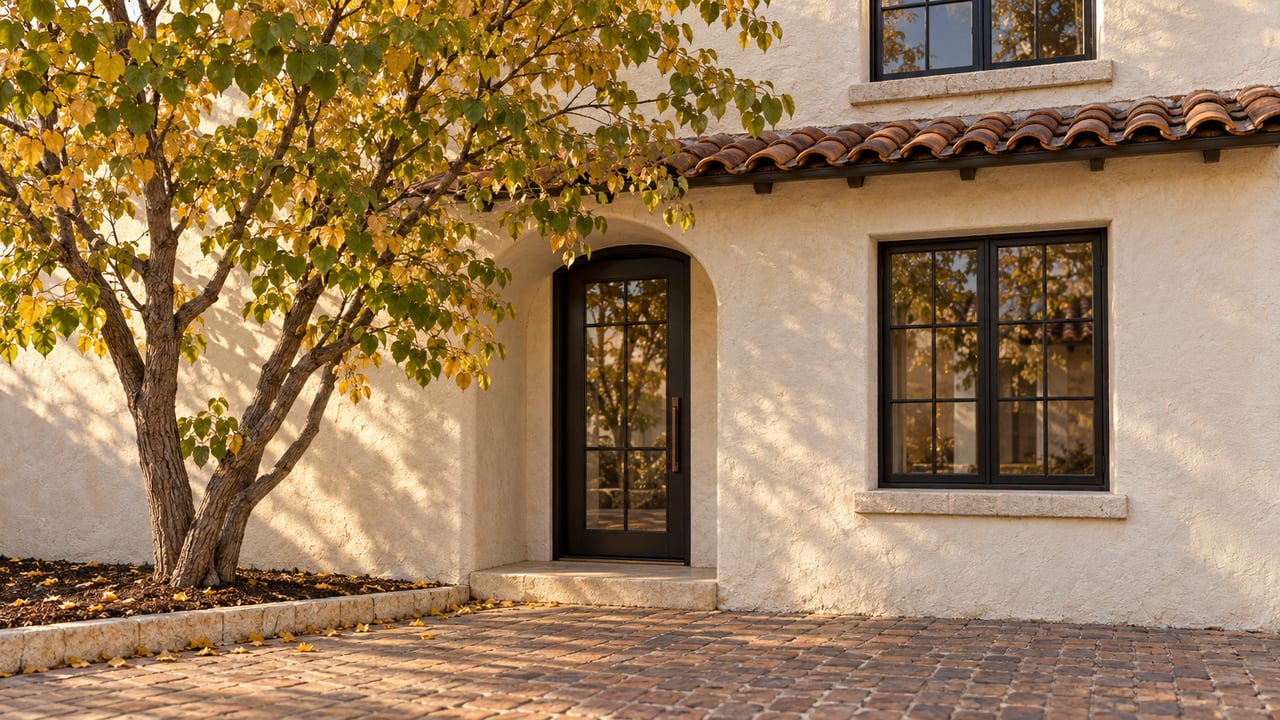
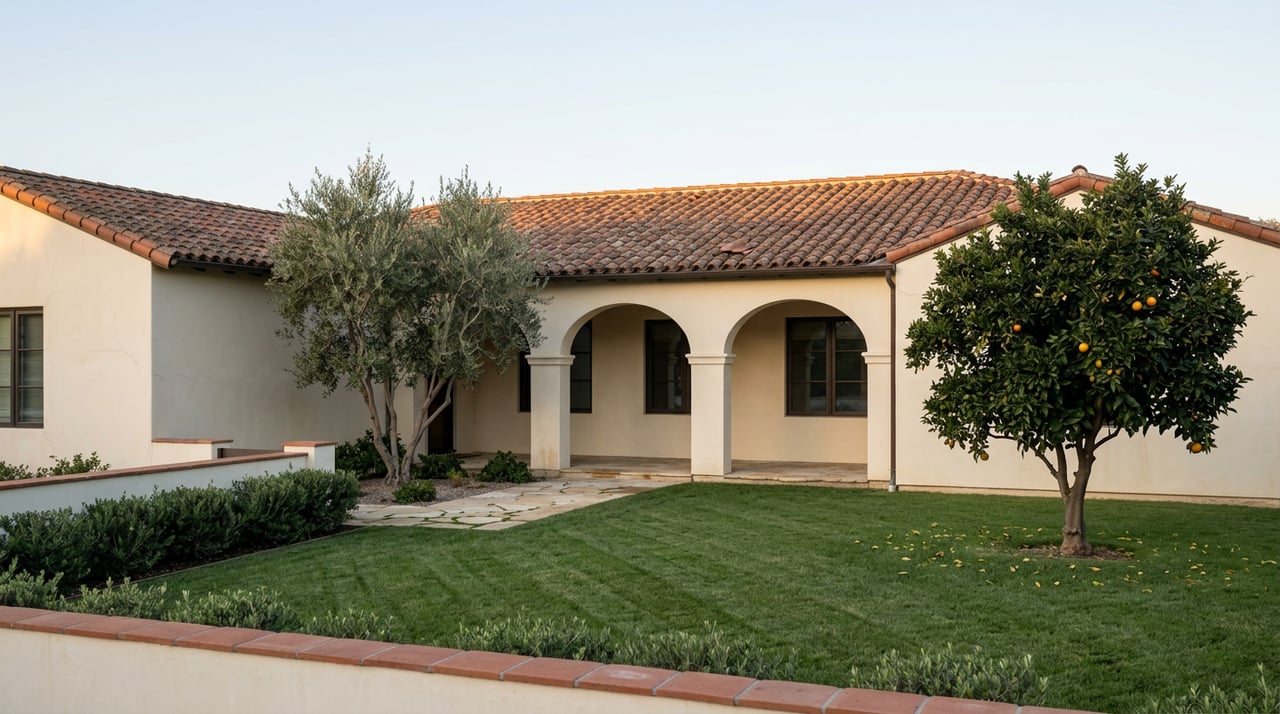
Mission Revival homes are typically marked by stucco walls, red clay tile roofs, mission dormers or parapets, overhanging eaves, arched openings, and restrained ornament. The look is clean, warm, and closely tied to Southern California history.
Spanish Colonial Revival shares some of that same vocabulary, especially stucco walls and tile roofing, but it often adds patios, balconies, wrought iron details, and more asymmetrical massing. In simple terms, Mission Revival often reads more formal and pared back, while Spanish Colonial Revival can feel more layered and expressive.
Downtown Riverside and the Mission Inn area are key reference points for these styles. If you are looking at homes or buildings in and around older central neighborhoods, you will often see how these influences helped define Riverside’s civic and residential identity.
Why these styles stand out
Mission and Spanish-inspired homes often have strong visual presence from the street. Arched entries, tile roofs, and stucco exteriors tend to create a memorable silhouette, especially in older neighborhoods where the architecture still feels cohesive.
For sellers, these homes often benefit from careful presentation of original features. For buyers, it helps to notice whether the defining details still feel intact or whether later changes have altered the home’s original character.
Ranch homes shaped postwar Riverside
After World War II, Riverside expanded in a very different way. According to the city’s Historic Preservation Element, the Ranch house became the single most prevalent residential form in Riverside.
These homes are usually one story and built around an informal layout. They often include attached garages, lower rooflines, and a horizontal footprint that spreads across the lot rather than rising vertically.
The city’s modernism survey notes that California Ranch homes usually feature rambling plans, low-pitched roofs, attached garages, and larger lots. Modern Ranch homes push that horizontal look even further, often with recessed entries, privacy screens, and mid-century detailing.
Local examples identified by the city include Victoria Groves, the Sun Gold Terrace tracts known as the Mountain Streets and Cowboy Streets, and Grand Avenue Bluff. These neighborhoods show how Riverside’s postwar years favored space, convenience, and car-oriented living patterns.
What Ranch style tells you
Ranch homes often offer a very different living experience from earlier Riverside housing. The layouts are usually more open and informal, and the attached garage becomes part of the street-facing composition.
The surrounding streets often tell the same story. Curving roads, broader lots, and more suburban spacing usually go hand in hand with Ranch-era development.
Revival styles and estate homes
Riverside also includes a strong collection of traditional revival homes, especially in older and more established areas. The city identifies Classical Revival, Tudor Revival, and Colonial Revival as part of the local architectural mix.
These styles often stand apart from Craftsman and Ranch homes because they tend to use more formal symmetry, steeper rooflines, or historically inspired detailing. A Tudor Revival home may show steeply pitched roofs and a more vertical profile, while a Classical Revival home may lean on columned entries and balanced facades.
Hawarden Hills landmarks include Orchard House, a Tudor Revival residence built between 1917 and 1920, and Greystones, a Classical Revival house built in 1902. The Wood Streets Historic District also includes notable examples of Craftsman, Spanish Colonial Revival, Tudor Revival, and Colonial Revival homes.
For buyers, these homes can offer strong architectural identity and a sense of legacy. For sellers, their value is often tied to how well original style cues remain visible and how thoughtfully any updates have been handled.
Riverside neighborhoods by architectural feel
In Riverside, neighborhood setting matters almost as much as style. A house does not exist in isolation. Its lot, street pattern, terrain, and surrounding homes all shape how it is experienced.
Wood Streets and Downtown
Wood Streets offers one of Riverside’s most cohesive neighborhood designs. The city connects its character to a rigid grid, narrow streets, mature landscaping, and homes built almost entirely before World War II.
That makes it one of the clearest places to experience Riverside’s early residential layers. If you are drawn to Craftsman, bungalow, Tudor Revival, Colonial Revival, or Spanish Colonial Revival homes, this area provides strong visual continuity.
Downtown works a little differently. It is more of an architectural sampler, with the city identifying Spanish Colonial Revival, Mission Revival, California Bungalow, Beaux Arts, and modern style buildings in a compact district with more than a dozen National Register sites and more than thirty city-designated landmarks.
Victoria and the broader Victoria-area story
Victoria is best understood as a historic neighborhood shaped by landform as much as architecture. The city describes it as an older area where streets follow natural contours, with Victoria Avenue serving as a landmark corridor.
That means the area is not defined by one single house type. Instead, it reflects a broader Riverside story that includes early homes, changing subdivision patterns, and nearby postwar Ranch development such as Victoria Groves.
If you use the label Victoria Woods, it is most accurate to think of it as part of that broader Victoria-area context rather than one fixed architectural category. For buyers and sellers alike, the setting is a major part of the appeal.
Hawarden Hills and Alessandro Heights
Hawarden Hills combines early roots with later growth. The city says it was part of Riverside’s original 1883 footprint, included large citrus-oriented home sites around the turn of the 20th century, and saw much of its current development occur between 1970 and 1990.
Today, the area is mostly made up of mid-sized and estate lots on winding roads that follow the natural contour of the hills. That topography helps explain why architectural character here often feels tied to siting, privacy, and lot scale as much as to one specific style.
Alessandro Heights has a related but distinct story. The city says it remained largely undeveloped until the 1980s and is now a low-density, large-lot single-family neighborhood of estate homes in a hilly setting shaped by rugged topography and preserved arroyos.
In both neighborhoods, architectural identity often comes from the relationship between the home and the land. View orientation, driveway approach, outdoor spaces, and how the structure sits on the lot can be just as important as the facade style itself.
How to read a Riverside home
If you are trying to identify style quickly, start with a few simple features. Riverside’s own preservation guidance points to roof shape, eave depth, porch type, entry treatment, materials, and lot setting as key clues.
Here are some of the fastest ways to read what you are seeing:
- Roof shape: Craftsman and Ranch homes usually feel low and horizontal, while Tudor and other revival styles often rise more steeply.
- Porch and entry: Open Craftsman porches, arched Spanish openings, and columned Classical entries usually point to different periods and design traditions.
- Materials: Wood and shingle often suggest Craftsman or older revival homes, while stucco and tile lean toward Mission Revival or Spanish Colonial Revival.
- Garage placement: Attached garages are common in postwar Ranch neighborhoods and can help date the development pattern.
- Street pattern: Grids and narrower lots often signal early 20th-century subdivision planning, while curving streets and hillside siting are more common in later neighborhoods.
The more you notice these details, the easier it becomes to understand why one Riverside street feels different from another.
What buyers and sellers should know
In older Riverside neighborhoods, architecture is not just visual. It can affect planning decisions too.
The city’s Historic Sites Inventory distinguishes City Landmarks, Structures of Merit, Historic Districts, and Neighborhood Conservation Areas. Riverside also states that a Certificate of Appropriateness can be required for rehabilitation, alteration, demolition, relocation, or other changes to designated or eligible cultural resources, as well as contributing or non-contributing structures in historic districts or Neighborhood Conservation Areas.
The city also accepts Mills Act applications each year from January 1 through May 31 for qualified historic properties. If you are buying or selling a home in an older neighborhood, those details can matter in practical ways.
For sellers, the city’s guidelines note the importance of studying original appearance, later alterations, rooflines, windows, porches, garage placement, lot boundaries, trees, fences, and broader neighborhood context before planning changes. For buyers, that means it is smart to understand both the home itself and the rules that may shape future updates.
Why local guidance makes a difference
In Riverside, two homes with similar square footage can feel completely different because of style, street placement, lot setting, and architectural integrity. That is especially true in neighborhoods where character, views, historical context, and presentation all influence value.
When you understand how Riverside developed, you can make better decisions. You can spot what gives a property its identity, what may need special care, and what makes one block feel more cohesive than another.
Whether you are drawn to a Craftsman in the Wood Streets, a Spanish-style home near Downtown, a Ranch property in a postwar tract, or a custom estate in Alessandro Heights or Hawarden Hills, architecture is part of the buying and selling conversation. If you want thoughtful guidance rooted in Riverside neighborhood knowledge and a strong appreciation for property character, connect with the Brad Alewine Group.
FAQs
What architectural styles are most common in Riverside neighborhoods?
- Riverside is known for Craftsman, California Bungalow, Mission Revival, Spanish Colonial Revival, Ranch, Modern Ranch, Tudor Revival, Colonial Revival, and Classical Revival homes, with style often varying by neighborhood and growth era.
What defines a Craftsman home in Riverside?
- Riverside identifies Craftsman homes by low-pitched gable roofs, wide eaves, exposed rafters, grouped windows, open porches, and simple square columns.
What makes Mission Revival important in Riverside?
- The city says Mission Revival was born in Riverside, and its influence is visible in the Mission Inn area and other Downtown landmarks, making it a key part of the city’s architectural identity.
What should Riverside buyers notice when touring older homes?
- Buyers should pay attention to rooflines, porch design, entry details, materials, garage placement, lot pattern, and whether original architectural features appear intact.
What should Riverside sellers know about historic preservation rules?
- Sellers in designated or eligible historic areas may need to account for local preservation review, including situations where a Certificate of Appropriateness is required for certain property changes.
How do Alessandro Heights and Hawarden Hills differ from older Riverside neighborhoods?
- Alessandro Heights and Hawarden Hills are shaped more by hillsides, large lots, winding roads, and estate development patterns, while older neighborhoods like Wood Streets and Downtown are more closely tied to early grid planning and prewar architecture.